All of England's rivers and lakes polluted with chemicals, officials say
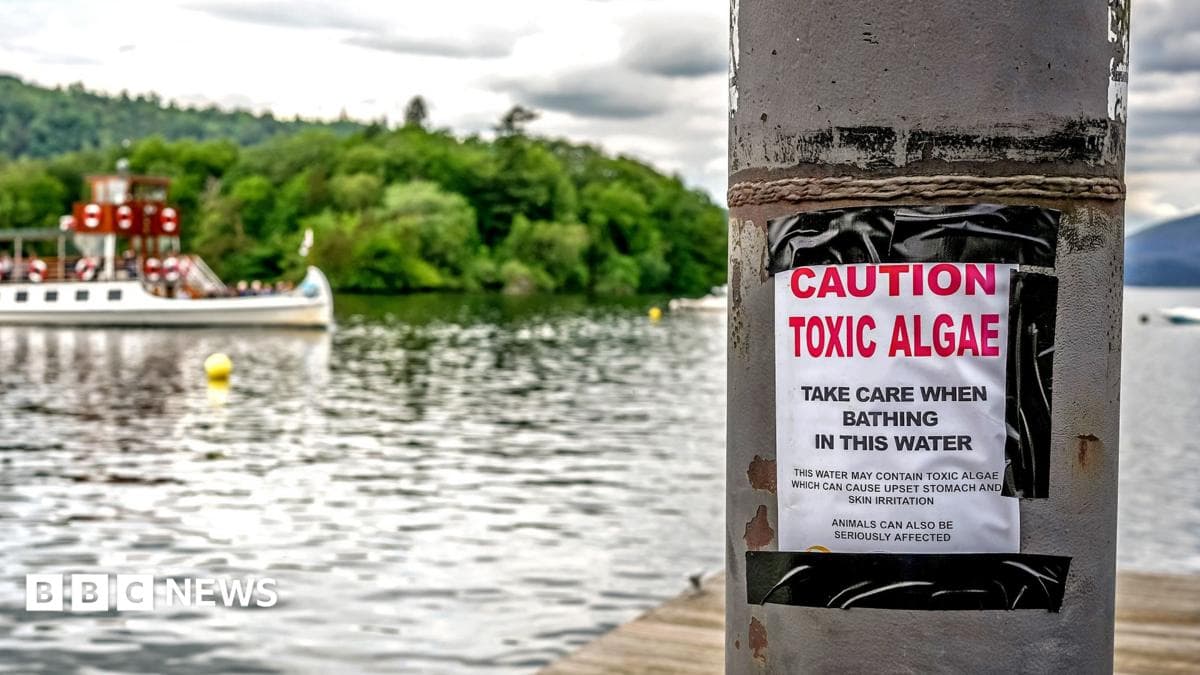
Data from the EA shows that while 15% of rivers are classed as good, fewer than 7% of lakes reached that level.
The biggest individual problem is phosphate - a nutrient from sewage and farm runoff - with around half of rivers still exceeding safe levels.
Despite a record £22bn earmarked for water company environmental improvements by 2030, the overall picture has changed little since 2019.
The government is on course to miss its legally binding target of restoring 77% of England's waters to good ecological status by 2027 - a goal the environmental watchdog, the Office for Environmental Protection, has warned will be missed by a "considerable margin".
It's now investigating both the government and the Environment Agency over possible rule breaches.
Environment Secretary Angela Eagle said the figures "underline the need for wholesale change across the water sector".
She pointed to new laws the government has introduced to hold water companies to account and record investment. "We will drive forward a system that puts the public interest first," she said.
Water UK, which represents the water companies, said it was spending record amounts of money on improving the country's waterways.
"Water companies are investing £22bn in environmental improvements by 2030. This will help to secure our water supplies, support economic growth and end sewage entering our rivers and seas."
The Environment Agency stressed that this year's data could not be directly compared with 2019 because it had changed its methods.
In particular, it said the steep fall in the number of lakes ranked as good - down about half from 2019 - largely reflected a change in how its experts now assess them, rather than a genuine decline in their condition.
Its chair, Alan Lovell, has acknowledged that too many water bodies were "still not achieving the standards we want to see", adding that the agency was "transforming our enforcement work" with its largest ever workforce.
But Prof Johnes said the true picture was almost certainly worse than the classifications suggested.
The scheme was "not fit for purpose", she said, measuring too few pollutants too infrequently, and missing nitrogen and other substances scientists have long understood to be driving rivers' decline.
The findings come as much of England sits in official drought, with rivers running low and more than 20 million people facing hosepipe bans.
Lower flows can concentrate the very pollution the new data is designed to track, leaving fish and other aquatic life exposed to more dangerous levels.
Climate change is expected to bring drier and hotter summers which could further exacerbate this issue.
Asked directly whether England's waters were healthier than six or seven years ago, Prof Johnes said: "No, definitely not."
Much of the debate about the state of England's waters has centred on water companies and the sewage they release into rivers.
But campaigners and scientists also point to agriculture as an equally large source of pollution - one that attracts far less public attention.
Erica Popplewell, of the campaign group River Action, said some farming, particularly intensive poultry units - vast sheds housing hundreds of thousands of birds - were a growing threat to rivers such as the Wye and Severn.
"There's a lot of poo that comes out of the chickens," she said. "If it goes straight into a river, it causes eutrophication. The whole ecology of the river is damaged, and the river is dying." She called on the government to tackle sewage and farming "with the same urgency".
The National Farmers' Union of England and Wales urged the government and the Environment Agency to prioritise working with farmers with targeted investment.
"These results demonstrate the need for continued action from every sector across the water supply chain, and farming is no exception, but the underlying indicators do show that the health of many waterways in England is encouraging, which is a positive foundation to build on," NFU deputy president Paul Tomkins said in a statement.
Reporting from BBC News contributed to this story.