Man Travels 10,000 Miles and Spends Nearly $40,000 to Cryogenically Preserve His Sick Dog
Australian guy spent nearly $40,000 to cryogenically freeze his dog and take her on one final adventure after she was diagnosed with terminal cancer.
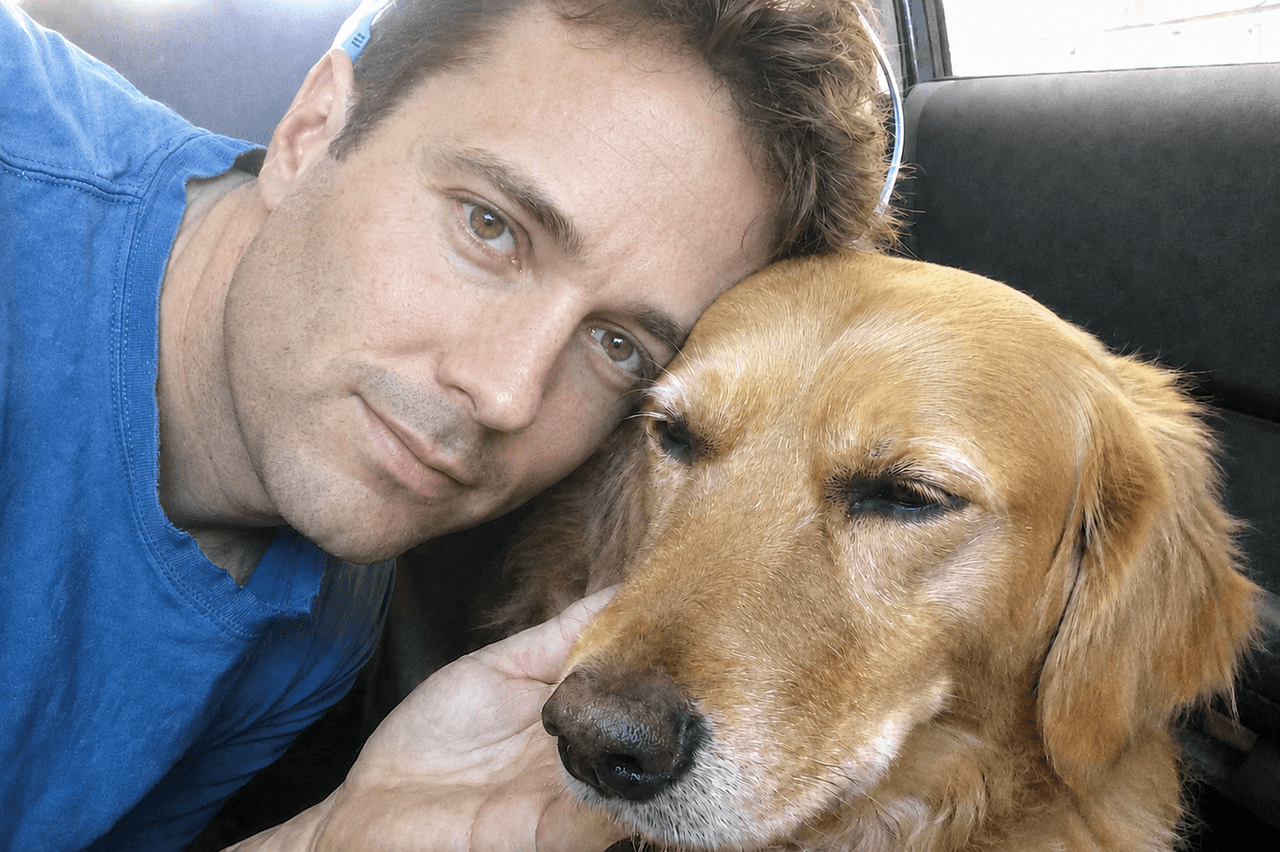
Dale Pearce said he was not “mentally prepared” to say goodbye to Betty, his beloved Australian Kelpie.
An Australian man crossed an ocean and spent almost $40,000 to have his terminally ill dog cryogenically preserved, hoping they might one day be reunited.
Dale Pearce, a 44-year-old game developer from Melbourne, rescued Betty when she was 2 years old. They enjoyed nine years of adventures, café visits and evenings cuddling in front of the television before Pearce received devastating news in 2017: Betty had terminal cancer.
“It was horrible to hear. I was expecting a good few more years with her,” Pearce said, explaining that he was not emotionally prepared to lose his longtime companion.
Determined to find a way to extend their time together, Pearce began researching experimental preservation methods. His search led him to the Cryonics Institute in Michigan, approximately 10,000 miles from his home in Australia.
The facility preserves legally deceased humans and animals at temperatures of around minus 321 degrees Fahrenheit. Supporters hope that future medical technology could eventually repair the damage caused by illness, death and the preservation process.
Pearce acknowledged that revival is far from guaranteed, but said cryonics offered a possibility that burial and cremation could not.
“The way I see cryonics is it’s a probability thing,” he explained. “If you put a body in the ground, there’s a high probability it’s not going to be revived. But with getting frozen, you have brought molecular interaction down to a standstill.”
Before saying goodbye, Pearce took Betty on one final two-week adventure. They travelled across Australia before visiting Hawaii and San Francisco on their way to Michigan.
Pearce planned the journey around the date they needed to arrive near Detroit. During the final days of the trip, Betty became increasingly tired, confirming to him that it was time to let her go.
“I didn’t feel like I was cutting her life short,” he said.
Betty was humanely euthanized at a veterinary clinic close to the Cryonics Institute, allowing the preservation process to begin as quickly as possible.
Pearce described the moment as bittersweet. Part of him feared it would be the final time he ever saw Betty, while another part found comfort in knowing that cryonics preserved at least a theoretical chance of seeing her again.
The preservation procedure reportedly cost approximately $20,000. When travel and related expenses were included, Pearce spent close to $40,000 on Betty’s final journey and preservation.
Cryopreservation prices vary according to an animal’s species, weight and size. Additional expenses can include veterinary treatment, transportation and membership fees.
Pearce believes the cost was worthwhile, even if the possibility of revival remains uncertain.
His ideal future is one in which advances in longevity allow him to remain alive for several more decades. If that does not happen, he hopes to be cryogenically preserved himself and eventually revived before Betty awakens.
Dennis Kowalski, president of the Cryonics Institute, argues that ideas dismissed as science fiction can sometimes become accepted medical procedures.
He points to defibrillation and heart transplantation as examples of treatments that might have appeared impossible to earlier generations.
However, modern science cannot currently revive a cryogenically preserved person or animal. It remains unknown whether future technology will ever make such a procedure possible.
For Pearce, even a remote possibility is enough.
Betty may now be suspended in time, but Pearce hopes their story has not reached its final chapter. If science advances far enough, he believes the two companions could someday be together again—ready for another adventure.