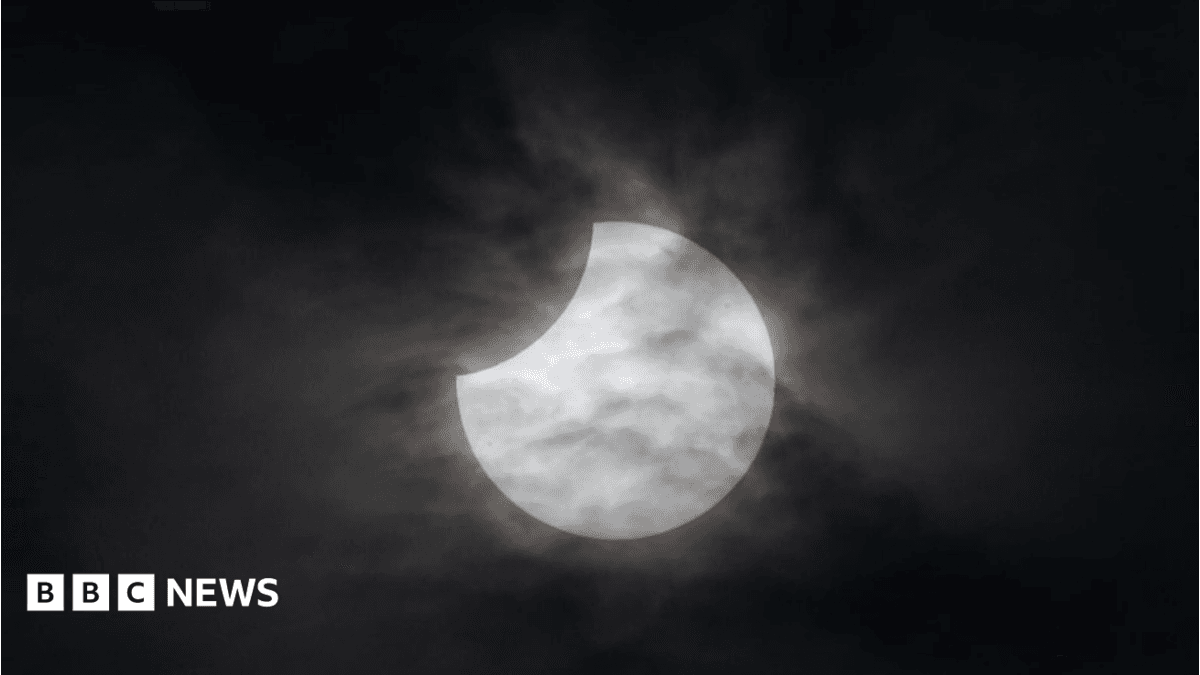
Solar eclipse: Most of sun to be eclipsed across island of Ireland
Several hours later, the Perseid meteor shower will reach its peak later in the night, and overnight into Thursday.
A new moon means moonlight should not interfere with viewing, creating favourable conditions if skies remain clear.
The Perseids are produced by tiny pieces of dust and rock left behind by comet Swift-Tuttle.
When the particles enter Earth's atmosphere at high speed, they heat the surrounding air and create brief streaks of light.
The meteors can appear anywhere in the sky, but their path seems to trace back to the constellation Perseus, which rises in the north east and climbs higher during the night.
Observers are advised to find a dark location away from streetlights and to allow at least 10 minutes for their eyes to adjust.
No telescope or binoculars are needed and, under ideal conditions, around 100 meteors an hour could be visible.
More information can be found here.
Reporting from BBC News contributed to this story.