Threat to oil tankers in Middle East worst since start of Iran war, analysts say
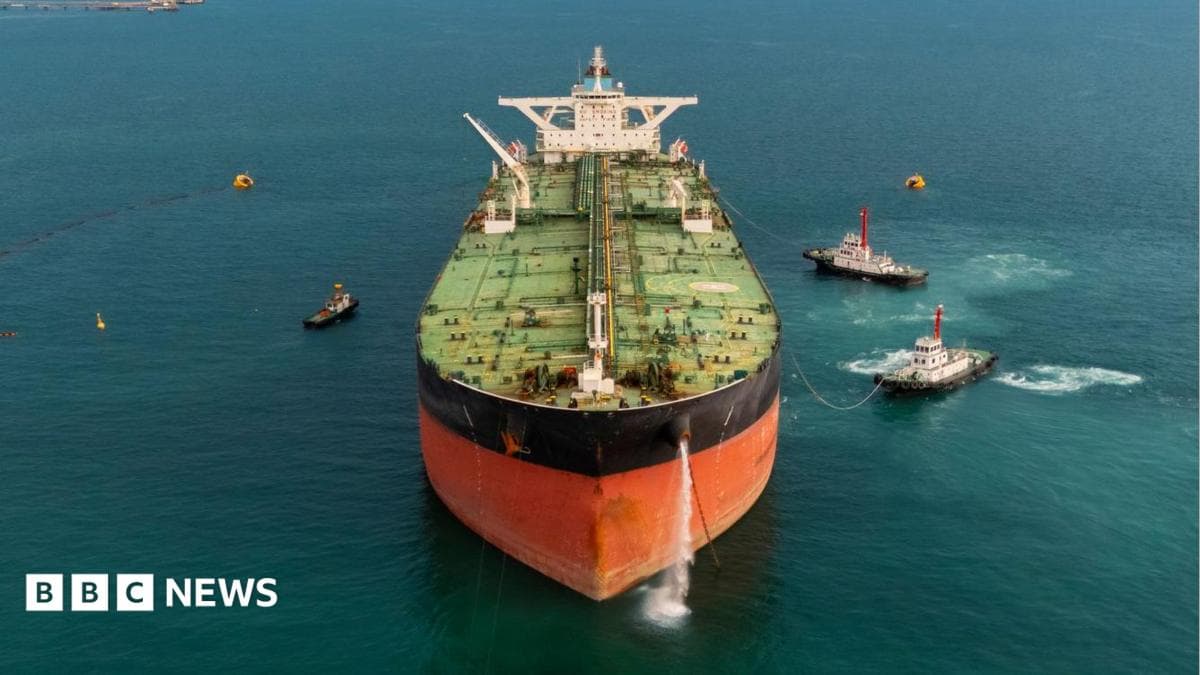
The threat to ships carrying oil in the Middle East is at its worst since the Iran war started, experts have said, after a spate of attacks on another key route in the region.
The warning comes after a number of attacks on vessels in the Red Sea, an alternative waterway that some tankers had been using since Iran blocked the Strait of Hormuz.
Iran has denied Donald Trump's claim that it was in talks with the US over reopening the strait, but said it was speaking to Oman about securing the shipping lane.
"In terms of threat to the trade of crude, we're at the worst period that we've been in since this since this crisis began," said Matthew Wright, an analyst at ship-tracking firm Kpler.
The number of ships passing through the Strait of Hormuz was just eight on Sunday and 11 on Saturday, compared with more than 100 per day before the war began, according to Kpler.
Before the conflict, about 20% of the world's oil and gas passed through the strait.
The temporary peace deal with the US struck in early June led to numbers rising again, but the resumption of strikes between the two countries roughly a month later have significantly reduced traffic.
Many ships have been "going dark" when crossing the strait, meaning they turn off their transponder to avoid detection.
For much of the war, some ships carrying oil from Saudi Arabia had instead passed through an alternative shipping lane in the Red Sea, between the kingdom and northeast Africa.
But a recent spate of attacks by Yemen's Houthi fighters on Saudi tankers using the alternative waterway has further heightened the risks.
Despite the talks with Oman, Iran has said that no deal is imminent that would reopen the strait to normal traffic.
Its foreign ministry ministry spokesman Esmaeil Baqaei said any agreement would not lift the current restrictions while US "aggression" continued.
Kpler's Wright said that while talks with Oman could be productive, any deal would need the involvement of the US and the fear is that current negotiations could be a "false start" without concessions on at least one side.
Nonetheless, oil prices fell sharply after Trump said he would cancel planned strikes on Iran based on the potential for upcoming talks.
Brent crude was trading 4.4% lower at $84.05 a barrel, after it fell as much as 7.3% to $81.55 a barrel earlier in the day.
Peter Sand, chief analyst at Xeneta, another ship-tracking company, said the fighting had taken the shipping industry "back to to square one" and that things were in "a terrible state, regardless of which shipping type you're you're looking at".
"The alternatives for getting cargo, whether that's hydrocarbons or container shipping, are really not great… it is really still troubling times with no clarity and no change of fortunes within sight."
Reporting from BBC News contributed to this story.