What it's like to discover an ancient Egyptian tomb, and the race against time to preserve it
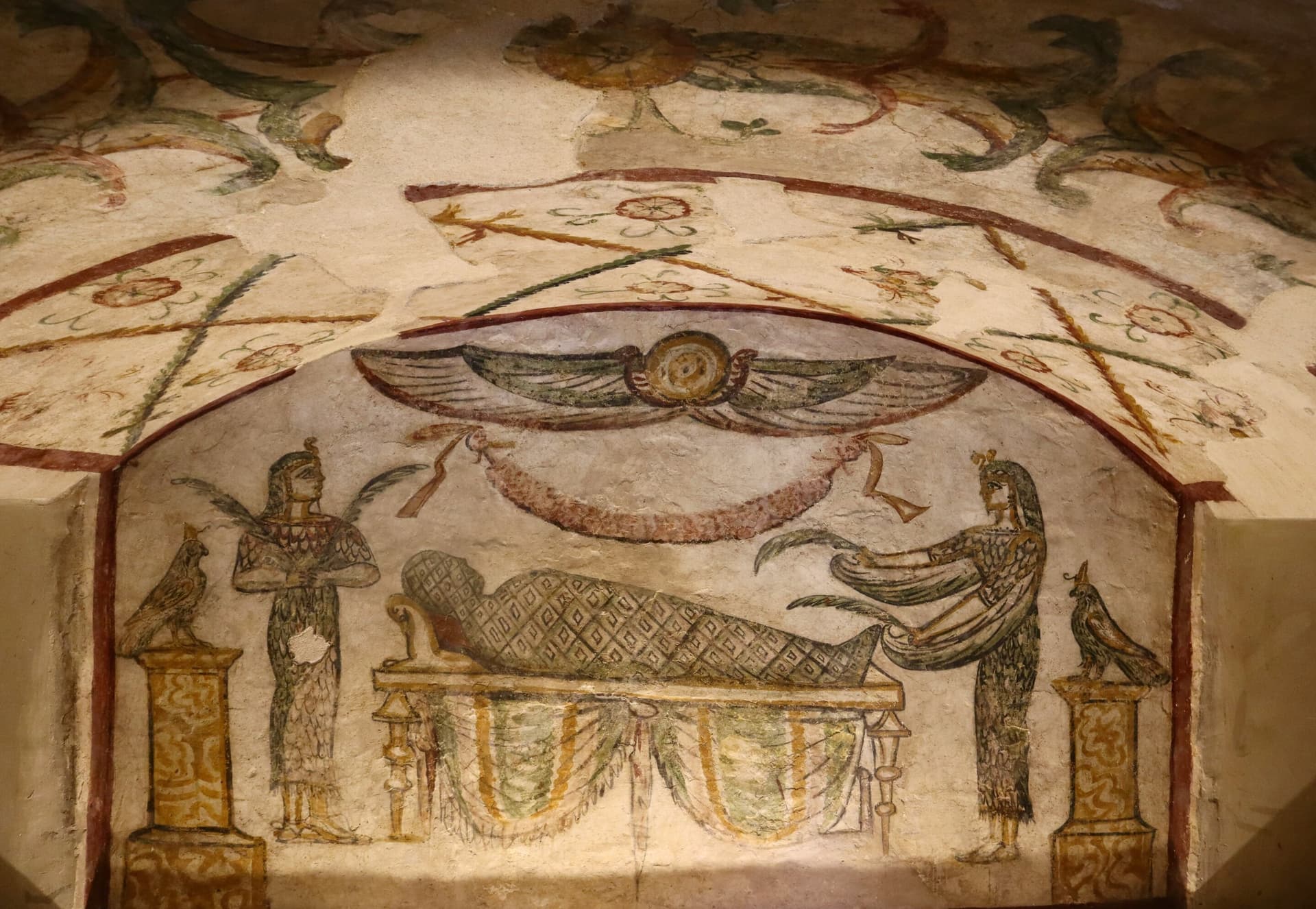

Looking inside a newly discovered ancient tomb for the first time is both exciting and terrifying. I was fortunate to experience this recently as director of an international research team carrying out fieldwork in the Theban necropolis, a UNESCO World Heritage Site near the modern Egyptian city of Luxor.
Our project's primary aim is to implement a conservation and risk management program for the necropolis (burial ground) of Lower Sheikh 'Abd el-Qurna. Due to its location at the foothills of the Theban mountain, monuments in this area are extremely vulnerable to flash flooding from intense bursts of rain.
To direct this floodwater away from the tombs, we are systematically removing debris and excavating the area, using archaeological techniques that ensure all historical information is preserved. This is how we came across this previously unknown, roughly 3,000-year-old tomb.
As we prepared to enter it, we had no idea whether the ceiling had collapsed, the tomb had been looted or destroyed, or it was still well preserved.
Its layout is typical of Theban elite tombs dating to the New Kingdom period (ca. 1550–1069 BC). At that time, Thebes (now Luxor) was Egypt's capital and main religious and political center.
The tomb features an outer courtyard, a rock-cut chapel and subterranean burial chambers. The well-preserved courtyard area includes a mudbrick platform with a niche for a stela (upright stone grave marker) and a staircase with ramps on either side, giving access to the tomb.
Once inside the rock-cut chapel, we noticed that its walls were decorated with vivid paintings of the main tomb owner adoring various deities in shrines and sitting with his wife in front of an offering table laden with bread, beer, fruits, meat and flowers. Based on the iconography and painting style, we determined that the tomb dates to the Ramesside period (ca. 1292–1069 BC), named after the many pharaohs called Ramesses in that era.
This was a particularly exciting moment. These wall paintings offer invaluable historical details about ancient Egyptian daily life and society. They also shed light on the tomb owner's position in the Ramesside hierarchy and on the other family members buried here—plus, potentially, later reusers of the tomb.
Identifying the tomb's owner
The vast Theban necropolis, comprising an area of around 10km², was Egypt's main royal and elite cemetery for half a millennium, from ca. 1550 BC onward.
Situated opposite the city of Thebes on the west bank of the River Nile, it features many world-famous historical sites, including the Valley of the Kings (a burial ground for pharaohs including Tutankhamun and Ramesses II) and Valley of the Queens, plus hundreds of private elite tombs, royal memorial temples and remains of royal palaces.
Our team has been carrying out fieldwork here since 2018, in close collaboration with the Egyptian Ministry of Tourism and Antiquities.
Based on an initial analysis of the painted decoration inside the tomb, we identified its main owner as a male official named Paser. However, the paintings are covered in a layer of dirt. Once they are cleaned by a conservation specialist, we expect to find out more about the identities and personal narratives of the people buried here.
One of the main research questions associated with our fieldwork focuses on tomb placement and reuse—for which the newly discovered tomb carries important scholarly significance. It will help us explain why, in the Ramesside period, officials such as Paser chose to reuse, modify or build tombs adjacent to the monuments of the preceding 18th Dynasty elites.
Specific questions we will try to answer include: How did features of the ancient mortuary landscape (including proximity to processional routes, tombs of relatives or monuments of special cultic importance) influence the placement of these tombs? And what influenced the decision to reuse them for burial rather than build new ones?
A race against time
Unfortunately, our work is something of a race against time. As a result of climate change, the frequency and intensity of flash flooding are expected to increase significantly here in the coming years.
This poses a major threat to the tombs in this area. Flooding can lead to immediate, extensive damage, such as moisture-activated growth of salt crystals, loss of painted decoration and, potentially, structural collapse. So, one of the most important aims of our project is to implement a preventive conservation and risk management program that safeguards these monuments for future generations.
At the same time, these activities allow us to explore this area archaeologically for the first time, revealing the historical and cultural development of the Lower Sheikh 'Abd el-Qurna necropolis. Up to now, this area has barely been studied in comparison with famous nearby sites such as the Valley of the Kings and the large temple complexes of Luxor and Karnak.
But our ongoing research shows that Lower Sheikh 'Abd el-Qurna is rich in archaeological material. This includes exquisitely decorated tombs that offer a unique glimpse into the daily lives, funerary beliefs, artistry and monuments of Egypt's ordinary people and officials over many centuries.
This article is republished from The Conversation under a Creative Commons license. Read the original article.
Citation: What it's like to discover an ancient Egyptian tomb, and the race against time to preserve it (2026, August 12) retrieved 13 August 2026 from https://phys.org/news/2026-08-ancient-egyptian-tomb.html
This document is subject to copyright. Apart from any fair dealing for the purpose of private study or research, no part may be reproduced without the written permission. The content is provided for information purposes only.
Reporting from Phys.org contributed to this story.