What's in the Gaza peace deal roadmap?
The exact mechanism of how the handover of weapons would work is not clear. It is believed that all heavy weapons – including Hamas's remaining rockets - and other military hardware would be moved into a secure storage managed by the National Committee. As yet, the committee has not entered Gaza. It has been working from Cairo.
In terms of timeframe, the document we have seen says only that this would happen "in a gradual, sequential, and time-bound manner, based on an implementation schedule to be prepared within 14 days."
Hamas has since said giving up its heavy weapons is contingent on Israel ending "all forms of aggression" and withdrawing its forces from Gaza.
Israel's commitment to ending its attack on Gaza is a "fundamental prerequisite" for moving forward with the deal, the group said in a statement.
Underground tunnel networks, weapons stores and manufacturing sites would be mapped and destroyed.
Remaining personal arms and police weapons would need to be registered and handed over in stages to the new Palestinian police force working under the supervision of the International Stabilisation Force (ISF). Hundreds of new Palestinian police recruits have already been trained in Egypt and Jordan. Israel's cabinet recently approved some 200 international troops from "friendly countries" entering Gaza as part of the ISF, but it has not yet been deployed.
Hamas has been seeking assurances that pro-Israel militia in Gaza will be dismantled and will also give up their arms.
The announcement has, so far, been met with little enthusiasm in Gaza, though some people told the BBC they saw a glimmer of hope. After years of failed ceasefires and collapsed agreements, many Palestinians have grown deeply sceptical of a new political deal.
The Israel Defense Forces (IDF) confirmed to the BBC earlier reports of an Israeli strike on Gaza just hours after Trump announced the deal, in which it was reported that several Palestinians were injured.
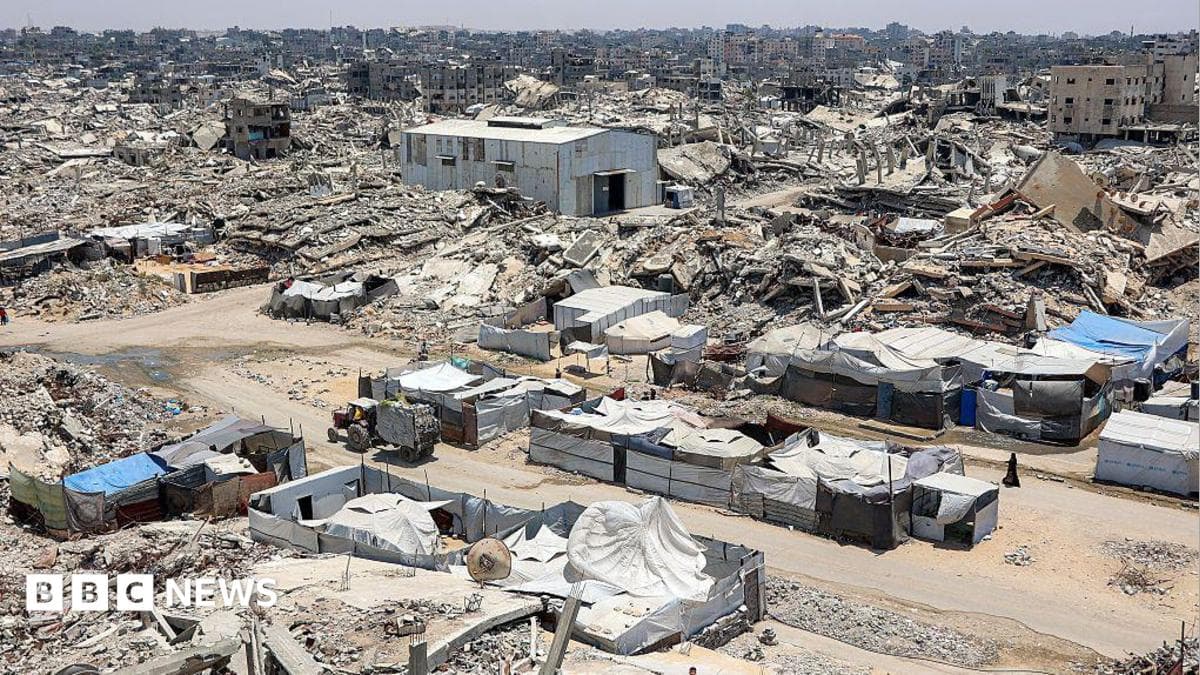
More than two million Palestinians are living in terrible conditions in Gaza, battling disease, a lack of access to food, clean water, and adequate shelter.
These people are living in a shrinking chunk of land, as Israel continues to build land barriers, further displacing families and expanding its "Yellow Line" temporary control area deeper into the territory.
At least 1,168 Palestinians including children have been killed in Israeli attacks since the ceasefire took effect, according to figures from the Hamas health ministry whose figures are considered reliable by the United Nations.
Four Israeli soldiers have been killed in Palestinian attacks in Gaza over the same period.
Israel has destroyed more than 1,500 buildings in areas of Gaza that have remained under its control since the ceasefire, satellite images seen by BBC Verify last November showed. The actual number is likely much higher, with imagery unavailable for some areas.
According to UN estimates, around 60 million tonnes of debris has been generated since October 2023.
Reporting from BBC News contributed to this story.